Ending every Friday with a list of hassles? Marcus Aurelius' Book 1 as a weekly five-line list, and what a 2003 gratitude study found
A call-centre supervisor who ends each Friday listing hassles can borrow the shape of Marcus Aurelius' Meditations Book 1, beside a 2003 study where 192 students kept weekly gratitude or hassles lists for 9 weeks.
Marcus Aurelius opened the Meditations with a list of what he owed
You supervise a shift of 25 agents in a call centre. By Friday evening your head holds a list: the escalations, the no-shows, the queue that never cleared.
Marcus Aurelius began his notebook with a different list. How to Find Your Meaning's free Stoic lessons teach short Stoic practices; this post borrows the shape of one book of the Meditations and sets it beside a study of weekly lists.

In George Long's translation on Wikisource, Book 1 opens:
- "From my grandfather Verus [I learned] good morals and the government of my temper."
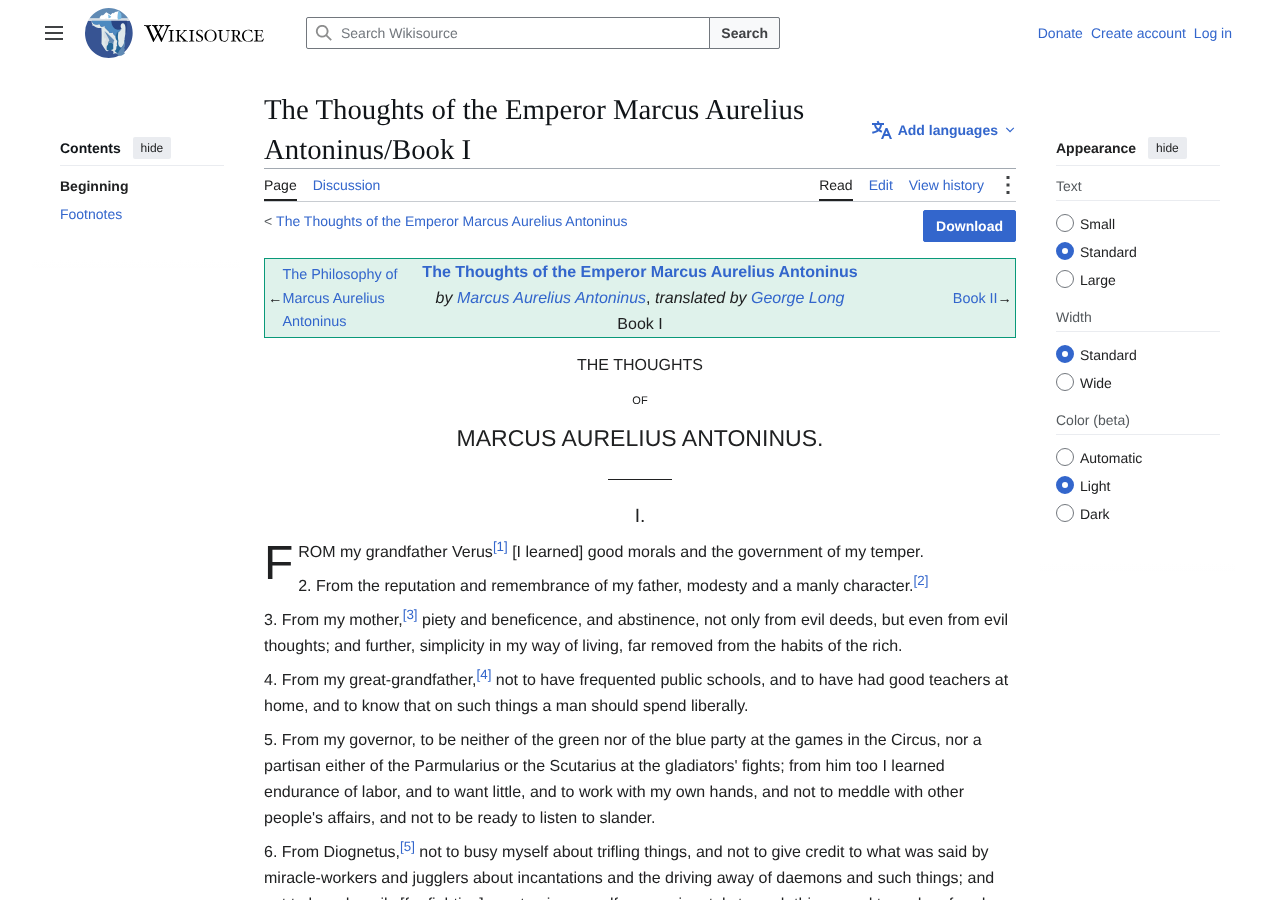
Book 1 is one line per person, ending with thanks
Each section names someone and what Marcus took from them.
- Book 1 has 17 numbered sections.
- Section 2: "From the reputation and remembrance of my father, modesty and a manly character."
- Section 17 opens: "To the gods I am indebted for having good grandfathers, good parents, a good sister, good teachers, good associates, good kinsmen and friends, nearly everything good."
- The book closes with a place: "Among the Quadi at the Granua."
Long's note says that if those words are genuine, Marcus may have written the book during his war with the Quadi. He wrote this list on campaign, not on holiday.
A 2003 study compared weekly gratitude lists with hassles lists
Robert Emmons and Michael McCullough published three studies in the Journal of Personality and Social Psychology. In Study 1, students were randomly given one of three weekly forms.
| Detail | Number |
|---|---|
| Undergraduates enrolled | 201 |
| Participants analysed after missing data | 192 |
| Items on each weekly list | up to 5 |
| Weeks of follow-up reports | 9 |
| Year published | 2003 |
- The gratitude form asked for "up to five things in your life that you are grateful or thankful for."
- The hassles form asked for up to five hassles.
- A third group listed neutral events.
The gratitude group felt better about the week ahead
Compared with the hassles and events groups, the gratitude group in Study 1:
- Rated their life as a whole more favorably.
- Were more optimistic about the upcoming week.
- Reported fewer symptoms of physical illness.
Against the hassles group alone:
- They exercised nearly 1.5 hr more per week.
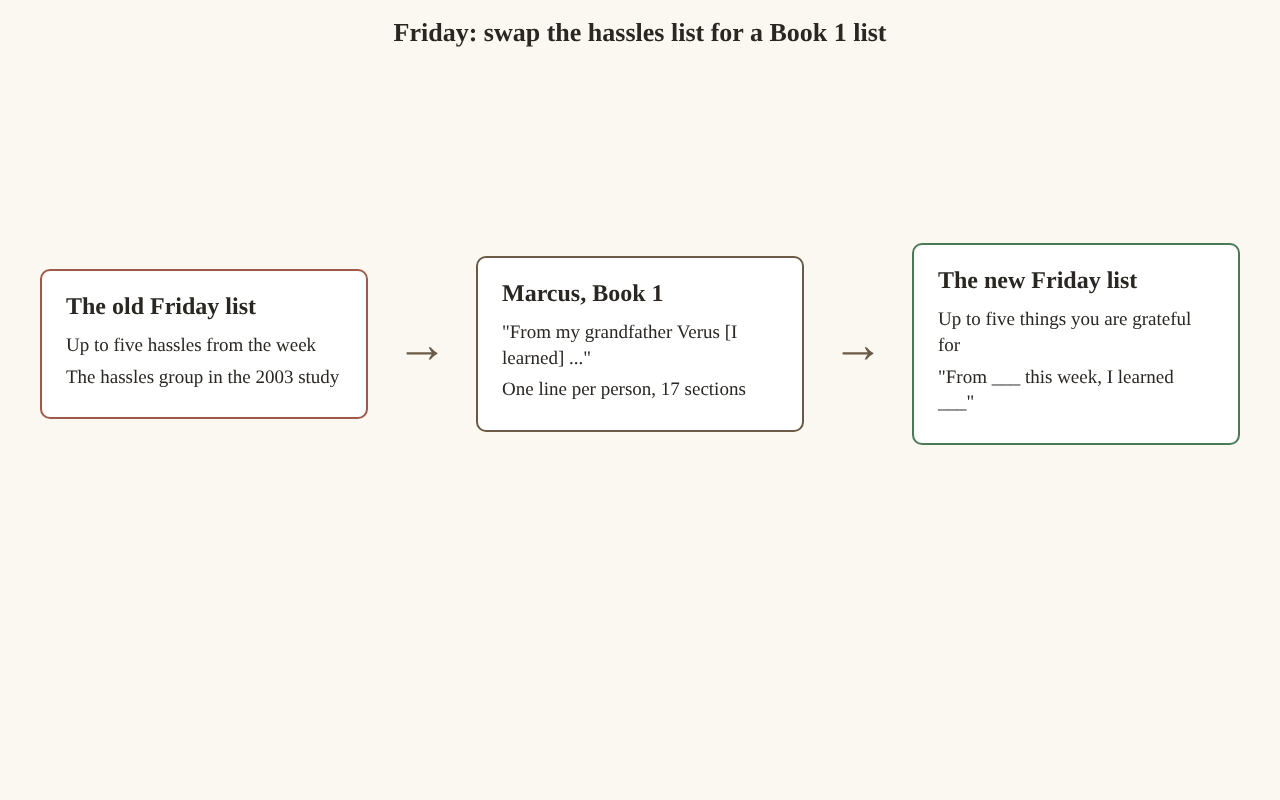
A five-line Friday list for a shift supervisor
This plan is built from the sources above. Marcus did not write it as a method and the study did not test it on supervisors.
- On Friday, before you leave the floor, write up to five lines, the number the study used.
- Write each line in Marcus' shape: "From ___ this week, I learned ___." Use an agent, a caller or your own manager.
- Keep the hassles off this page. They belong in the handover, not in this list.
- Do it weekly, as the study's first group did, for 9 Fridays before you judge it.
For a nightly version of a written review, see Skipped your Stoic evening review? What a habit study says about the missed night. For a hard week with one person in it, see A colleague who keeps talking down to you? Marcus Aurelius' morning line, and what a study found about rudeness and team performance.
What these sources did not show
- Study 1 was of undergraduates in a health psychology class, not call-centre staff.
- Not every finding replicated across the three studies.
- The exercise finding did not replicate in the paper's shorter 2-week and 3-week studies.
- The authors call their task "a rather minimal intervention".
- Marcus wrote a private notebook, not a method; nobody tested Book 1 as a weekly list.
- Nobody tested the five-line plan above.
- Long's is one translation; others word these lines differently.
Frequently asked questions
Did Marcus Aurelius keep a gratitude journal?
Not in that name. Book 1 of the Meditations is a list of what he took from each person around him, and its last section thanks the gods for good grandfathers, parents, a sister, teachers and friends.
What did the 2003 gratitude study actually ask people to write?
In Study 1, the gratitude group wrote up to five things they were grateful or thankful for each week. The hassles group wrote up to five hassles, and a third group wrote neutral events.
Does a weekly gratitude list work for everyone?
The paper does not show that. Its participants in Study 1 were students, some findings did not replicate across its three studies, and the authors call the task a minimal intervention.
Which translation of the Meditations is this?
George Long's, as published on Wikisource. Other translations word these lines differently.
Sources
- The Thoughts of the Emperor Marcus Aurelius Antoninus, Book I, translated by George Long (Wikisource) - the grandfather Verus line, the father line, 17 sections, the thanks to the gods, "Among the Quadi at the Granua" and Long's note.
- Counting Blessings Versus Burdens: An Experimental Investigation of Gratitude and Subjective Well-Being in Daily Life (Emmons and McCullough, 2003) - Study 1: 201 students, 192 analysed, up to five items weekly, 9 weeks, better life ratings and optimism, fewer symptoms, nearly 1.5 hr more exercise; the exercise finding not replicated; "a rather minimal intervention".